Stop Saying “Don’t Do That”: A Better Way to Discipline Toddlers
Introduction
This morning, while getting my toddler ready for school, she wouldn’t sit still. She was playing with her sister, moving around, laughing—everything except letting me put her socks on. I tried to stay calm, reminding myself that this is what discipline looks like with a toddler—guidance, not control—but in that moment, I lost my temper and yelled.
Almost immediately, the guilt hit.
Like most parents, I want my toddler to behave. I want calm mornings and cooperation. But we often expect toddlers to handle emotions better than we do ourselves. And when we don’t know how to manage our own frustration, it comes out as shouting.
Most of us were raised very differently. We weren’t taught how to name emotions or calm ourselves—we were simply told to behave. Now, we’re learning these skills as adults while trying to teach them to our children. That doesn’t make us bad parents. It makes us cycle-breakers.
So what does discipline actually look like when you’re trying to break the cycle?
That’s where this guide comes in. Toddlers don’t need punishment—they need guidance. In the sections ahead, you’ll learn how to discipline your toddler in a way that teaches emotional skills, sets clear boundaries, and helps you stay calm—without yelling, hitting, or carrying guilt afterward.

Discipline with toddlers is about guidance, not control or punishment.
What Discipline Really Means for Toddlers (Not Punishment)
At this toddler stage, we’re basically their entire world.
They trust us completely. They love us deeply. And most of the time, they want to listen to us—even while testing every limit.
That bond is powerful.
And it’s exactly why discipline works best with love, not fear.
⇒Saying “no” isn’t rejection.
⇒It’s guidance.
When toddlers cry (and wow, they cry loud), it can hit a nerve fast. That sharp, overwhelming sound can push any parent toward yelling. If that’s happened to you—you’re not broken. You’re human.
But here’s the shift:
⇒ We don’t have to match their volume with ours.
Discipline isn’t about stopping the crying right now; discipline with a toddler isn’t about yelling or forcing quiet either—it might work for a moment, but the behavior almost always comes back. And honestly? That’s exhausting for everyone.
⇒Short-term silence isn’t the goal.
⇒Long-term emotional skills are.
Real discipline is teaching toddlers how to handle feelings they don’t yet understand. It’s helping their brain learn regulation, patience, and cause-and-effect—slowly, repeatedly, imperfectly.
Think of it like building a house.
- Every calm correction.
- Every clear boundary.
- Every moment you stay steady instead of reactive.
Those are bricks.
And the good news? You don’t need harsh punishments, yelling, or fear-based control to build something strong.
Discipline that truly works looks like consistency, patience, and repetition. We model the behavior we want to see. We guide them through big emotions. And yes—we repeat ourselves a lot.
⇒It’s not about control.
⇒It’s about teaching.
When we discipline this way, we’re not just guiding our toddlers—we’re breaking old cycles and raising emotionally capable little humans who feel safe, understood, and deeply connected.
And that kind of discipline?
It lasts.
Why Toddlers Misbehave (And Why It’s Not Defiance)
When you see your toddler doing the exact thing you’ve already said “don’t do that” to a thousand times, it’s easy to assume they’re doing it on purpose. Like they know it pushes your buttons. But that’s not what’s actually happening.
The truth is, their brain just isn’t there yet. Toddlers are still developing impulse control and emotional regulation, which is why repeating a behavior isn’t defiance—it’s part of learning how their world works.
When a toddler repeats a behavior again and again, it usually comes down to one of two things:
⇒We haven’t clearly taught them what they can do in that moment.
⇒Or they’re still learning the skill we’re expecting from them.
A blunt “don’t do that” doesn’t give their brain anything to hold onto. It doesn’t teach a replacement behavior, and it doesn’t stick.
We also tend to overestimate how much toddlers can express when emotions run high. Even if they know how to say “I want this,” that skill often disappears when they’re:
- Overtired
- Hungry
- Overstimulated
- Emotionally overwhelmed
That’s when screaming or crying takes over. Not because they’re trying to be difficult, but because their nervous system can’t keep up.
The same thing happens with waiting. When you’re on a phone call and say, “Wait, I’ll be right back,” it feels like they’re ignoring you. But waiting requires skills toddlers don’t have yet, like
- Pausing an impulse
- Thinking ahead
- Choosing a better response
- Their brain simply isn’t wired for that right now.
On top of all this, toddlers are craving independence. They want to make choices. They want to test boundaries. They’re learning things like
⇒What happens when I push here?
⇒What works to get my needs met?
⇒Where are the limits?
That back-and-forth you feel isn’t defiance—it’s learning.
This is why toddlerhood feels like the hardest stage for so many parents. Especially in public, it can make you feel judged or like you’re failing. But discipline with a toddler isn’t about punishment or control—it’s about guidance and skill-building.
- We’re not trying to stop behavior in the moment.
- We’re helping them grow into skills they don’t have yet.
And that perspective changes everything.
The Foundations of Healthy Toddler Discipline
Healthy toddler discipline isn’t about controlling behavior in the moment. It’s built on a strong foundation that helps children feel safe, understood, and capable of learning. These three principles make discipline effective and lasting.
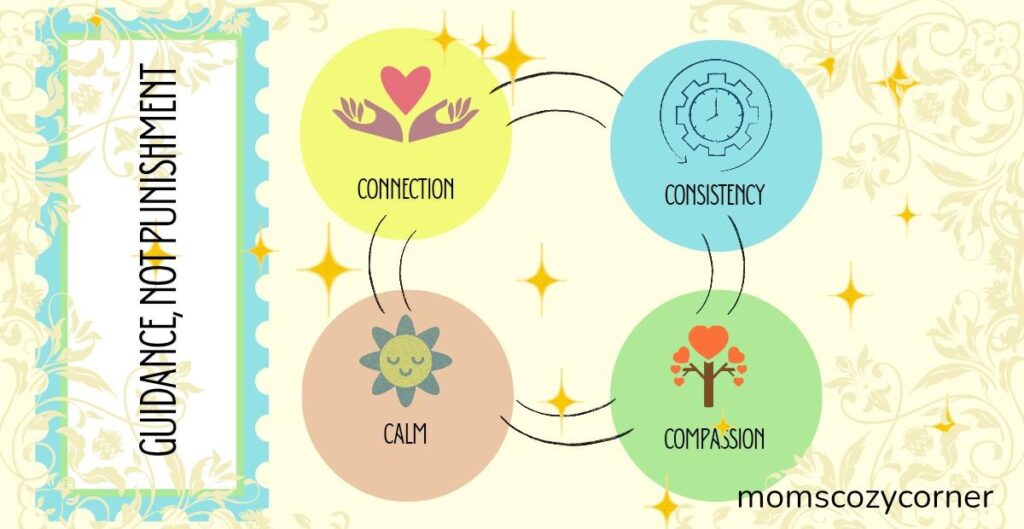
Healthy toddler discipline is built on connection, calmness, and consistency.
Connection Before Correction
Ever notice how your toddler just shuts down when you yell?
That’s their brain on overload.
When emotions spike, their nervous system takes control.
In that moment, they basically can’t focus or hear what you’re saying. Trying to correct them right then?
⇒Totally pointless.
⇒They’re not ignoring you—they just can’t process it.
⇒Sometimes they even push you away or move apart.
⇒Don’t take it personally.
Their little brains are just figuring out how to cope, and this isn’t about defiance.
Connection doesn’t have to mean:
- a big lecture
- forcing them to sit with you
- explaining everything right away
It can be as simple as this:
- Staying nearby.
- Calm.
- Quiet.
Let them have their moment while you sit calmly, rub their back, or just be present.
Your steady energy helps them settle down and get their attention back.
Only after they’ve calmed down does guidance actually work.
Correction comes after calm—not before.
Because they can’t really learn when their brain is still in “overload mode.”
Consistency Without Harshness
Most of us really do try to set boundaries. We decide on a rule and genuinely want to follow it. For example, we choose one hour of screen time a day. We follow it. A few days go by, and things seem okay.
Then one day, after that hour is over, your child asks for just ten more minutes.
- You say no.
- They cry.
- You stay firm.
- It feels hard, but you manage.
The next day, the same thing happens again. But this time, the crying is louder. More intense. And something inside you starts to feel triggered. Not because you don’t love your child—but because the noise, the pressure, and the repetition are overwhelming.
In those moments, many of us:
- give in, or
- snap, or
- feel rude and guilty afterward
I’ve been there too.
This doesn’t mean boundaries don’t work. It means consistency is harder than we expect—especially when emotions rise. When the boundary changes, the child isn’t trying to “win.” Their brain is simply learning what works.
Consistency doesn’t require harshness. It requires awareness. Learning from these moments and holding the boundary calmly next time is how real toddler discipline slowly takes shape.
Teaching Skills, Not Controlling Behavior
Toddler discipline isn’t about getting kids to listen immediately or do exactly what we say. That might stop behavior in the moment, but it doesn’t teach them anything. It’s more about control than learning.
When children don’t learn skills, they depend on us to step in every time. They don’t know what to do when we’re not right there guiding them. And that’s not real discipline.
Think about sibling fights. Saying “don’t fight” may stop it for now, but it doesn’t help next time. What we really want is for them to slowly learn how to handle those moments on their own. That means teaching skills—how to talk, listen, negotiate, and accept another person’s point of view. Those skills take time and practice.
Toddler discipline is long-term. At this age, the core skills include
- expressing needs with words
- managing big emotions
- waiting and taking turns
- following simple routines and boundaries
You may hear about the “five C’s of discipline”—connection, calmness, consistency, clarity, and compassion. You don’t need to memorize them. When discipline focuses on teaching, these naturally fall into place.
How to Discipline a Toddler Without Hitting or Yelling
We all know hitting or yelling might make our toddler stop in the moment—but only because they’re scared.
Pain or fear sends one message to their brain:
⇒“Stop now. This isn’t safe.”
They don’t actually learn anything from it.
And most of the time, the behavior comes back—often stronger.
So yes, fear can stop the moment.
But it teaches nothing long-term.
So what actually works?
Let’s look at a real-life moment most parents know well.
Your toddler refuses to leave the park.
Before correcting them, the first step isn’t talking to your child—it’s calming yourself.
- Take a deep breath.
- Relax your face.
- Soften your voice.
- Let your body slow down.
It’s hard. Way harder than it sounds.
But your calm energy signals safety—and that’s what helps your toddler tune in instead of reacting.
Connection before direction
If your toddler is on the swing, join them.
- Push them for a minute or two.
- Play with them briefly.
Then gently guide:
“After this, we’re going to the car and listening to your favorite song all the way home.”
⇒ You’re not stopping the fun abruptly.
You’re telling them what’s coming next—and giving them something to look forward to.
Setting boundaries with choice
Sometimes they’ll still resist. That’s normal.
Here’s where choice helps:
“If you want five more minutes, you can ask me. We’ll do exactly five minutes, and then we go to the car.”
This teaches something powerful:
- They can ask for what they want.
- Tantrums aren’t the way.
- Limits are clear and predictable.
Because you’ve already explained what happens after, they’re less likely to push for more.
It becomes a win-win:
- They feel heard.
- You stay calm.
- The routine stays intact.
Why this works
Hitting or yelling might feel faster in the moment.
But it teaches nothing.
- Calm presence.
- Clear guidance.
- Predictable limits.
Those are what help toddlers:
- Learn emotional control.
- Understand expectations.
- Feel safe and connected.
And yes—this approach to discipline a toddler also makes parenting feel a lot less stressful.
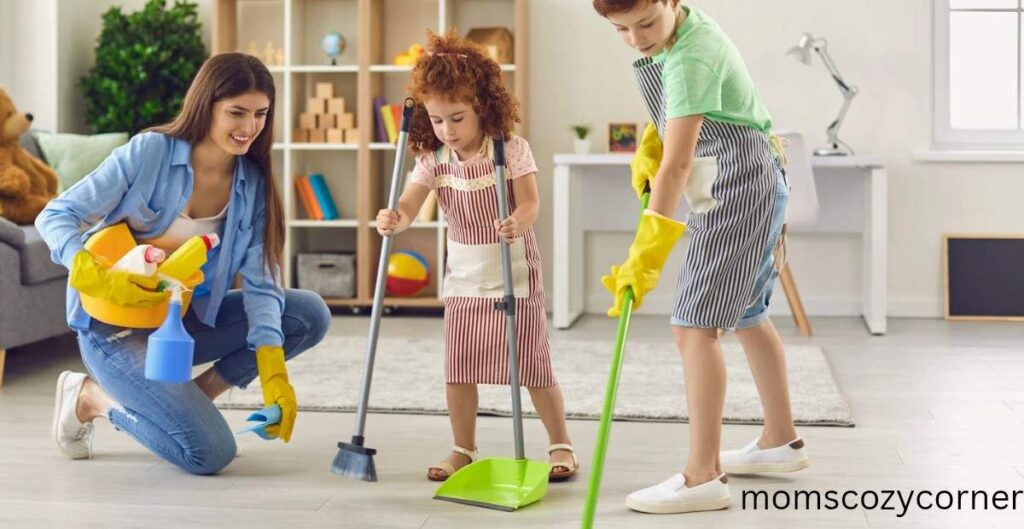
Natural consequences help kids understand cause and effect without fear or shame.
Using Related (Logical) Consequences Toddlers Understand
A consequence is not a punishment.
⇒It’s not a timeout, yelling, threatening, or taking away something randomly.
A consequence is simply showing a toddler what happens when a certain behavior shows up—in a calm, neutral way.
Toddlers learn limits through cause and effect, not through explanations—this is why natural consequences for not listening work so well at this age.
What related consequences really mean
Related (or logical) consequences are directly connected to the behavior.
They answer one simple question for a toddler’s brain:
⇒ “What happens when I do this?”
No lectures. No emotional reactions. Just clarity.
Why time-based punishments don’t work
When a toddler is sent to timeout or punished later:
- They don’t know why they’re there.
- They don’t connect the behavior to the outcome.
- They only learn avoidance or fear.
A toddler’s brain can’t link behavior and consequence unless it happens right away and makes sense.
Real-life toddler examples
Here’s how this looks in everyday situations:
- Throwing toys → the toy is removed
- Scribbling on the wall → the crayon is taken away
- Hitting: you calmly remove yourself or the child from the situation.
- Unsafe behavior → closer supervision or physical guidance
No anger. No shaming. Just action.
For example, if your toddler scribbles on the wall:
- You don’t explain.
- You don’t lecture.
- You don’t scold.
- You calmly take the crayon and move on.
This teaches:
⇒“Crayons are for paper. When I use them on the wall, they go away.”
That’s learning.
“But what if my child cries?”
Yes—they will cry. That’s normal.
Crying is just their way of processing a boundary. It’s a discharge of frustration, not a sign that you need to change your mind.
When that happens:
- You don’t give the crayon back.
- You don’t negotiate.
- You don’t rush to stop the crying.
- You stay close, calm, and neutral.
Your steady response teaches something powerful:
⇒My actions have predictable results, and my parent stays calm even when I’m upset.
Over time, this is how toddlers learn limits without fear, without shame, and without aggression.
Hitting or yelling may stop behavior fast—but it teaches nothing.
Calm, connected consequences teach toddlers how the world works—and make parenting a lot less stressful too.
Handling Common Toddler Behavior Challenges
When toddlers hit or act out, it’s rarely bad behavior. They don’t yet have the words or brain skills to handle big emotions. Being tired or overwhelmed makes it worse. Before correcting the behavior, the first step is understanding why it’s happening.
When Your Toddler Hits
Hitting is a common behavior in toddlers, and it doesn’t mean your child is being “bad.” Most of the time, it means they don’t have the words to communicate what they’re feeling. They might be frustrated by too many instructions, tired, overstimulated, or trying to protect something they don’t want to give up.
Hitting is communication—but it’s not an appropriate one. That’s the skill we teach.
In the moment, long explanations won’t help. If they hit while playing, stand up and step back. You don’t have to leave the room, but you stop the play. This creates a clear ‘pause’ in the fun. No yelling. No lectures. Just a neutral response. This shows them that hitting changes the situation—and not in their favor.
At a separate time—when your toddler is relaxed and regulated—you can briefly guide them on better ways to communicate. Not through lectures, just simple words. This is how discipline is taught to a toddler without fear or shame.
If you’re dealing specifically with hitting and want practical, real-life strategies, you may find this guide on how to stop toddler from hitting helpful.
When Your Toddler Throws Things
When toddlers throw things, it’s usually not about being naughty. Most of the time, they’re overwhelmed, frustrated, or simply curious. At this age, they’re still learning how emotions work—and some kids throw things just to see what happens, hear the sound, or watch it fall.
In the moment, the most effective response is simple and calm. Remove the object without explaining, reacting, or showing anger. No lectures. No facial expressions. Just a clear, neutral action. This teaches them that throwing ends access to the object.
This small response might feel too simple—but it’s actually powerful. Over time, consistent calm reactions help toddlers connect actions with outcomes. If throwing is happening repeatedly, there are gentle, age-appropriate ways to reduce it by teaching safer alternatives and emotional expression. I’ve explained this step-by-step in How to Stop a Toddler From Throwing Things When Words Don’t Work so you can respond with confidence instead of frustration.
Yes, they may cry—and that’s okay. Staying calm and neutral in this moment does not mean you don’t love them. One neutral response doesn’t erase your bond or your care. It simply teaches a clear boundary.
Stay nearby, stay steady, and let them come to you when they’re ready. They still know you’re there for them.
“My 3-Year-Old Is Out of Control” Moments
Age three is one of the most challenging stages— not because your child is difficult, but because their brain is still very immature, which is why discipline for a 3-year-old needs patience and guidance. They want independence more than ever. They want to put on shoes, eat by themselves, and draw something exactly the way they imagine it. But they don’t yet have the skills to make it work.
When their hands can’t do what their mind wants, frustration builds fast. That’s when you see refusals, shouting, and sudden meltdowns. This is totally normal. It doesn’t mean your kid is “bad” or “out of control.” Labeling them that way actually makes it harder for you to stay calm and guide them.
Handling these moments with patience is part of healthy toddler discipline. The skills you teach now—handling frustration, waiting, asking for help—will stick with them long after this phase. This stage will pass, and your guidance will pay off for life.
Getting Toddlers to Listen (Without Threats or Power Struggles)
By now, we know toddlers don’t “not listen” on purpose. Their brain is still developing, especially impulse control. On top of that, they’re often getting instructions nonstop—from us, our partner, siblings, and even people around them. One instruction turns into many, and their brain gets overwhelmed.
The more we repeat, explain, or lecture, the harder it becomes for them to process anything at all. What we think is helping often does the opposite.
That’s why one clear instruction works better than a long list. Toddlers can only handle one piece of information at a time.
Timing matters too. If your child is deeply focused on play, calling out instructions from across the room won’t work. Even as adults, when we’re absorbed in our phone or work, we half-hear what’s being said. Toddlers are no different.
Instead, get close. Gently touch their shoulder or say their name. Wait until they look at you. Then give one simple, future-focused instruction:
⇒“It’s time for a bath.”
or
⇒ “It’s time to go to the car.”
This helps them understand what’s coming next, not just what they have to stop doing.
Say it once, calmly. If they don’t respond, there’s no need to lecture or repeat yourself. Follow through gently—help them transition. If they cry, that’s okay. You stay calm, stay present, and let their nervous system settle.
Over time, this kind of toddler discipline teaches something deeper than obedience. Your words become predictable and safe. Listening becomes a skill they develop—not obedience forced through fear or power struggles.
If you find yourself stuck in a loop of repeating instructions, check out our guide on How to Get Kids to Listen Without Shouting, which breaks down the brain science behind the “first-time listen.”
Gentle Parenting vs. Permissive Parenting (Why Boundaries Still Matter)
Because of social media, the term “gentle parenting” has gone viral. And honestly, a lot of parents now think it means saying yes to everything, avoiding tears, and giving in so their child never feels upset. That’s not gentle parenting—that’s permissive parenting.
Gentle parenting still has boundaries. Kids can cry, get mad, or feel disappointed, but the limit stays. You’re not trying to stop the emotion—you’re staying calm and letting it pass without turning it into a back-and-forth fight.
Toddlers don’t need adults who control or expect blind obedience. They need adults who help them regulate emotions and guide them without yelling or threats. Calm, consistent boundaries help their brain learn what to expect next. That’s authority without fear—and that’s what makes gentle parenting different.
Discipline Methods Explained (So You’re Not Confused)
There are so many discipline techniques online that it’s easy to feel confused. The truth is, not every method works for every age—and that’s because a child’s brain develops in stages. What works for older kids often doesn’t work for toddlers or when it comes to discipline for preschoolers, whose skills are still developing.
For example, the 1-2-3 discipline method works better for older kids who understand numbers and cause and effect and can pause their behavior. Toddlers don’t have those skills yet, so counting usually doesn’t land.
The same goes for time-out vs. time-in. Time-out can work for older kids when it’s done calmly, without anger, shaming, or isolation. It gives them space to reset. But toddlers don’t yet know how to “think about what they did,” so time-out often just feels confusing or scary.
That’s where time-in fits. During a time-in, you don’t need to be a ‘cheerleader’ or a ‘therapist.’ You just need to be a steady presence. Think of yourself like a mountain—calm, unmoving, and safe—while their emotional storm passes. Whether they’re upset about crayons going outside the lines or struggling to tie shoes, the goal is to let the emotion pass first. The skill can be taught later.
There’s no single “best” discipline method. What matters most is choosing an approach that matches where your child’s brain is right now—connection before correction for toddlers, and more space and reflection as kids grow.
What Not to Do When Disciplining a Toddler
When toddlers struggle, many of us react in ways that feel automatic—but some responses actually shut down learning instead of helping it.
# Yelling or Shouting
Even if we don’t hit, raising our voice can scare toddlers. Fear shuts down the part of the brain responsible for learning and problem-solving. When they’re scared, they’re not learning—they’re just trying to survive the moment.
# Physical Punishment
Hitting a toddler hurts them physically and emotionally. You can see the fear on their face, which shuts down their brain and blocks your words. Instead of learning, they feel scared, and the connection you’ve built weakens. Physical punishment creates fear, not understanding.
# Shaming or Labeling
Saying things like “you always spill” or “you’re so rough” can stick in their mind. Instead of motivating change, it lowers confidence and makes them feel stuck in that role.
# Empty Threats
Threats like “I’ll leave without you” may work once, but when we don’t follow through, toddlers learn that our words don’t mean much—and that creates confusion, not guidance.
# Long Lectures During Big Emotions
In moments like sibling fights, we often explain everything—“You shouldn’t hit; look how sad your brother is; we use hands for hugging…”
But when emotions are high, toddlers can’t process that many words. Teaching works better after they calm down.
# Inconsistency From Too Many Tips
We read advice on Google or Instagram, try a rule for two or three days, then drop it when it feels hard or doesn’t work fast. That back-and-forth confuses toddlers—they don’t know what to expect or which rule will stick.
Discipline a toddler isn’t about being perfect. It’s about calm, clear guidance—repeated consistently—so toddlers feel safe enough to learn.
The “Wait for the Breath” Rule:
Before you start teaching the lesson, wait until your child takes a deep, spontaneous breath. That breath is the biological signal that their nervous system has reset and their brain is officially ‘open for business’ again.
Montessori-Inspired Discipline (Without the Fancy Setup)
When people hear Montessori, they often picture expensive wooden toys and perfect shelves.
But Montessori-inspired discipline isn’t about aesthetics—it’s about understanding behavior.
At its core, Montessori asks one simple question:
“What is making this hard for my child right now?”
Because toddler behavior is communication, not manipulation.
Montessori-Style Independence (What It Really Means)
Independence doesn’t mean leaving toddlers alone or expecting them to “figure it out.”
It means:
- Offering age-appropriate responsibility
- Supporting them while they try
- Staying present instead of taking over
Toddlers want to act like adults because they’re surrounded by adults all day—they’re trying to match that energy.
Examples:
- Choosing between two outfits
- Drinking from an open cup
- Putting toys back in a basket
- They will struggle.
- They will cry.
- They will retry.
And in those moments, your calm presence matters more than instructions or praise.
This kind of supported independence reduces power struggles and builds real self-control.
How the Environment Shapes Toddler Behavior
A “prepared environment” isn’t about wooden toys—it’s about reducing overwhelm.
Too much of anything can overload a toddler’s brain:
- Too many toys
- Too much noise
- Too many people
When the brain feels overwhelmed, behavior falls apart.
What helps:
- Fewer toys available at once
- Clear, predictable spaces
- A steady daily routine
When toddlers know what to expect next, their nervous system stays calmer—and many meltdowns never start.
Natural Consequences (Not Punishment)
Natural consequences teach cause and effect without fear, shame, or lectures.
Simple examples:
- Milk spills → they help wipe it up.
- Toys are thrown → toys are put away for now.
- Hitting happens → calmly removed from the situation
The message is not:
“You’re bad.”
The message is
“This behavior isn’t okay—and I’m here with you while you learn.”
These calm, predictable responses help toddlers learn what to expect—and that’s how learning sticks.
The Big Picture
Montessori-inspired discipline is not permissive parenting.
And it’s not about expecting toddlers to manage life on their own.
It’s about:
- Understanding how their brain works
- Shaping the environment to reduce overwhelm
- Holding calm, predictable boundaries
When independence, environment, and natural consequences work together, discipline stops feeling like control and starts feeling like teaching skills for life.

Staying calm during tough moments helps toddlers feel safe and learn emotional regulation.
Final Thoughts
Let’s be honest for a moment. Most of us have yelled. We’ve threatened. We’ve bargained just to get through the day. I’ve done it too. And if you’ve done any of that, you’re not a bad parent—you’re a human one.
Parenting toddlers—and figuring out toddler discipline—is hard. Some days you’ll feel calm and confident. Other days, stress, exhaustion, money worries, or life itself will knock you off track. That doesn’t mean you failed. It just means you’re learning.
This journey isn’t about becoming a perfect parent—because that doesn’t exist. It’s about becoming a little better than yesterday. When we mess up, we can pause, repair, say sorry, and try again. That alone teaches our kids something powerful: people make mistakes, and they can take responsibility and grow.
If you’re reading this, it already means you care. You’re breaking old patterns and choosing a different path—and that matters more than getting it right every time.
If there’s a discipline approach that’s worked for your toddler in a specific situation, feel free to share it in the comments. It might help another mom who’s feeling stuck right now.
And thank you—truly—for reading this far. Your time and trust mean a lot, and they’re what encourage me to keep writing and sharing more helpful parenting content.