
How to Get Kids to Listen: What’s Really Happening in Their Brain
Introduction
It was 8:40 in the morning. School starts at 8:50, and I knew we were already cutting it close. I told my daughter to go to the bathroom, but instead of getting ready, she was still in her room, hiding under the bedsheet—one of those moments that makes you wonder why kids don’t listen right away. I gave her some time. I reminded her calmly that we were getting late for school. Still, nothing. By the third call, my patience slipped—and I shouted.
She came out and looked at me and asked, “Mom, why did you shout?” Then she said something that stayed with me. She told me that if I had told her properly the first time, she would have come immediately. And then, very quietly, she added, “Sorry, Ma.” Tomorrow I’ll come on time.”
That’s when the guilt hit. Not because she was late, but because I raised my voice. And a question kept looping in my mind: Why didn’t she listen the first time? Why did she respond only after I shouted? Morning rushes are chaotic, and sometimes yelling feels like the only thing that works—but it never feels good afterward.
If you’ve ever asked yourself the same question and want your child to listen without shouting, threats, or daily power struggles, let’s break down what’s really happening—and how to handle it differently.

Sometimes kids aren’t ignoring us—they’re just not ready to respond yet.
Why Kids Don’t Listen in the First Place
To really help our kids, we first have to look at the real reasons behind the behavior. Once we understand the why, the way we see our child changes—for the better. Instead of quickly labeling them as “not listening” or “disobedient,” we pause and respond with more awareness. That shift helps both parents and kids and strengthens the relationship.
I’ve seen how labels can land harder than we expect. Once, my father casually said that my daughter “doesn’t listen.” It was said in the moment, but I could see how it affected her. That’s why understanding behavior before labeling it matters more than we think.
Research on early childhood brain development shows that young children are still learning self-control and attention skills.
Listening Skills Develop Slowly
Listening is a skill, just like walking or talking, and it develops gradually. Young kids can’t always hear our words and act right away. Their brain needs time to process what we say and turn it into action.
- Processing takes time.
- Action isn’t instant.
- It’s developmental, not intentional.
Emotional Overload Blocks Listening
When kids are hungry, tired, or overwhelmed, their listening pathway can shut down. Think about when you urgently need to use the bathroom—it’s hard to focus on instructions. For kids, overload feels the same.
- Hunger or exhaustion
- Too much noise
- Big emotions
In these moments, listening is genuinely hard.
Power Struggles and Control Battles
Sometimes kids don’t listen because they want to show they matter too. Their day is full of instructions, and not listening becomes a way of saying, “I want to do it my way.”
⇒“My voice matters.”
⇒“I want some control.”
This is about independence, not defiance. In some children, this need for control can come out physically—like hitting—when they don’t yet have the words or regulation skills.
How Parental Stress Affects Listening
Kids notice more than our words. When we rush them or speak in a strict voice, they feel the pressure immediately.
⇒Strict or hurried voice
⇒Tense body language
When stress rises, listening usually drops.
Next time your child doesn’t respond, ask yourself: Is this a ‘won’t’ or a ‘can’t’ moment?

Connection opens the door to cooperation.
How Kids Actually Learn to Listen
Listening is a skill. If our goal is instant results—kids listening right now through fear, pressure, or emotional threats—it may work in that moment. But it doesn’t build the real skill of listening. If the intention is for kids to hear the words, process them, and respond appropriately, that takes time, effort, and repetition. From my own experience, these three things matter most.
Connection Comes Before Cooperation
When I first called my daughter politely, she didn’t respond. Later, when I called her in a strict voice, she came—calm, but with a slight sense of caution. Afterward, she said, “If you had informed me first, I would have come.” That one line explained a lot.
- Sometimes kids don’t respond because the words don’t reach the brain for processing.
- Excitement, tiredness, hunger, or emotional overload can block listening.
- They may hear the sound, but the meaning doesn’t fully land.
- A brief emotional check-in often changes how they respond.
Connection opens the door to listening.
Repetition and Consistency Shape Behavior
Sometimes kids understand what we explain—but that doesn’t mean they’ve learned it.
- One-time instructions don’t create habits.
- Kids need the same response repeated again and again.
- Listening develops through practice, not explanation.
- Learning takes time because they’re still growing.
Consistency teaches them how to respond.
Modeling Respectful Listening
Kids learn by watching us—always.
- If we interrupt, they interrupt.
- If we snap, they snap.
- If we listen calmly, they copy that.
Behavior is learned through observation.
Parenting works both ways. As kids learn to listen better, we often become better listeners too.
Practical Ways to Get Kids to Listen Without Yelling
Our real goal isn’t to get instant results through fear or pressure. The goal is to help kids hear the instruction, process it, and act on it—slowly, over time. After the incident where I shouted at my daughter, I paused and reflected. I realized what worked wasn’t the shouting, but a few simple changes I started practicing consistently.
Set Clear Expectations Ahead of Time
One thing I changed was telling her what’s coming next, instead of giving sudden instructions.
For example, during breakfast, I tell her in advance: “After breakfast, we’re going to take a bath.”
So when breakfast ends, the instruction isn’t new or shocking.
What this helps with:
- Kids know what to expect.
- Their brain prepares for the next step.
- Less resistance when the moment arrives.
Get Eye Contact Before Giving Directions
There are days when she’s deeply involved in something—like coloring a magazine. Instead of calling out from another room, I go near her, get her attention first, and then give the instruction.
Why this works:
- The instruction actually reaches their brain.
- They shift focus before being told what to do.
- It feels clearer, not abrupt.
- Use Fewer Words, Not Louder Ones.
Earlier, I used long explanations like “You’ll get late for school” or talked about time she couldn’t fully understand yet. Now I keep it simple: “It’s time for a bath.”
This helps because
- Short instructions are easier to process.
- Less confusion.
- Kids know exactly what’s expected.
Follow Through Calmly and Consistently
Even after doing all this, there are days she still doesn’t respond immediately. This is the hardest part for us. Staying calm and consistent is not easy, but it’s the most important step.
What I’m learning:
- Calm repetition teaches better than shouting.
- Consistency builds understanding over time.
- This is key for long-term listening skills.
This calm consistency is what truly helps kids learn how to listen—not just today, but for the future.

Repeated warnings teach kids to delay listening.
Discipline That Encourages Listening (Not Fear)
When our kids don’t listen, our first instinct is often obedience—“Just do what I said.” But that’s not real discipline. Real discipline shifts our thinking from “How do I make my child obey right now?” to “What do I want my child to learn in this moment?”
Discipline doesn’t have to involve fear or power struggles—learning how to discipline a toddler calmly makes a big difference.
The goal isn’t fear-based listening. It’s helping kids understand why listening matters.
The Difference Between Discipline and Punishment
Punishment focuses on stopping behavior immediately—often through shouting, pressure, or fear. Discipline focuses on teaching a skill.
- Punishment is about control.
- Discipline is about learning.
- Punishment gives short-term results.
- Discipline builds long-term listening.
Instead of asking, “How do I stop this?” discipline asks, “What lesson does my child need right now?”
Natural and Logical Consequences
Understanding consequences helps us stay calm. We don’t need to protect kids from every outcome—some learning happens through experience.
Logical consequence (parent-created):
⇒I give my daughter 10 minutes to write 10 words.
⇒If she finishes → 20 minutes of play
If she doesn’t → playtime reduces to 10 minutes, and she returns to finish writing
The consequence is clear and connected.
Natural consequence (life-created):
If she gets late for school, the teacher questions her. I don’t add pressure—life teaches the lesson.
Why Threats and Repeated Warnings Backfire
My elder daughter was watching Numberblocks when it was time for her bath. I kept repeating warnings but didn’t act. She came only after many reminders.
Later, I realized this was my mistake. By repeating myself without following through, I taught her that my words didn’t matter right away.
Repeated warnings teach kids:
- They don’t need to listen the first time.
- Parents will keep talking instead of acting.
That moment reminded me to think before speaking. One clear instruction, followed by calm action, teaches listening far better than repeated threats.
Understanding Parental Triggers When Kids Don’t Listen
We already know there are many reasons kids may not listen in a given moment. What shapes the situation most is how we respond. When we’re tired, exhausted, and dealing with so many things and so many people, even small resistance can feel personal. Understanding our own triggers helps us pause, respond more consciously, and handle the moment with more clarity—even when it’s not perfect.
Why Not Being Listened to Feels Personal
When kids don’t listen, it often stirs feelings beyond the moment itself:
- Mental exhaustion from managing many responsibilities
- Wanting cooperation after a long day
- Feeling disrespected or unheard
- Self-doubt about parenting skills
- Assuming the child is doing it intentionally
Recognizing these as our feelings, not our child’s intention, helps separate emotion from behavior.
How to Stay Regulated in the Moment
Regulation isn’t about suppressing emotions—it’s about staying steady.
- Pausing before reacting
- Noticing triggers without acting on them
- Modeling calm behavior
- Co-regulating instead of controlling
- Practicing awareness, even imperfectly
Consistent regulation teaches children how to manage emotions.
Rebuilding Calm Authority After Losing Patience
I’ve been here many times—losing patience, then realizing I want to reset. I remind myself: something is better than nothing. Even a small shift back to calm matters.
What helps me reset:
- Slowing my tone and voice
- Softening my expression and reconnecting
- Returning to one clear instruction
- Moving forward without guilt
Calm authority isn’t superiority—it’s clarity, presence, and intention.
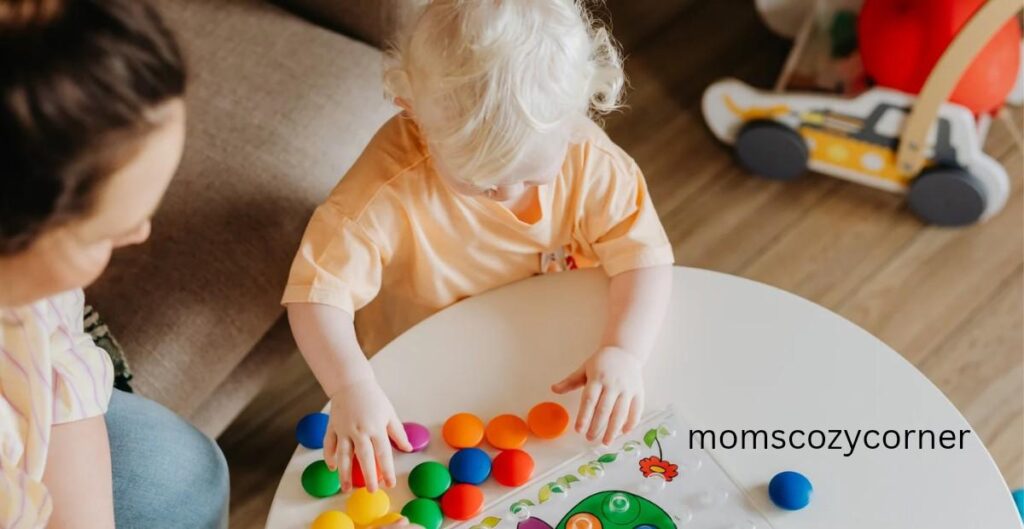
Deep focus can make kids miss instructions—even when they hear us.
When Listening Problems Keep Repeating
Sometimes it feels like no matter how many times we try, our kids just don’t listen. Don’t get upset—this is normal. Kids at this age are learning to process instructions, manage attention, and test boundaries. They need repetition and patience, and forgetting or getting distracted is not intentional.
When “Not Listening” Is a Developmental Phase
Kids are still learning how to listen and follow instructions, so sometimes it’s completely normal if they don’t respond right away.
1. My daughter used to ignore instructions when she was playing with building blocks or drawing, even if I called her multiple times.
2. Short attention spans and distractions are expected at this age.
3. Forgetting or not acting immediately is developmental, not intentional.
Signs Your Child May Need Extra Support
Every child develops differently, and some may need additional help.
- More frequent crying or meltdowns
- Difficulty calming down after frustration
- Slower response to routines compared to peers
Extra support doesn’t mean the method or child is “wrong”—it’s just their unique needs.
How This Connects to Other Behaviors
Listening issues often appear alongside other behaviors.
- Hitting, throwing, or difficulty transitioning can be linked to attention and processing skills.
- Recognizing patterns helps parents address multiple behaviors together.
- Consistency across routines and expectations strengthens listening over time.
For some kids, not listening also shows up as throwing objects during transitions or moments of frustration—because acting out feels easier than processing instructions.
Conclusion
We all want our kids to listen the moment we say something. Some days they do. Other days… not so much. And when they don’t, it’s easy to wonder, am I failing as a parent? You’re not. Listening isn’t obedience—it’s a skill, and skills take time to grow.
There will be good days and rough days. A hard day doesn’t cancel out all the effort you’ve already put in. Nothing is wasted. What really helps kids is consistency, patience, and clear words. When they know what to expect from us, listening slowly becomes easier.
This isn’t about you doing something wrong—or your child being difficult. It’s about how their brain is still learning to process words, emotions, and actions. When we focus on training the brain instead of blaming ourselves or our kids, everything shifts.
I hope this article helps you guide your child without fear, shame, or guilt—on either side. Parenting already carries enough weight.
If you’ve read this far, thank you. If this helped you, I’d love to hear your thoughts in the comments. And if another mom could use this today, feel free to share it.
Happy parenting.